For a cooler walking holiday, June to September is a useful starting point. Choose the actual hiking day from current access notices and weather, and start within official opening hours.
Researched 11 November 2026 · Independent visitor guide
PLAN YOUR EXPERIENCE
Check dates & availability
A three-hour guided hike to the halfway viewpoints and around Le Morne, without the summit climb. Arrange your own transport. Choose your date and check the selected option’s meeting instructions.
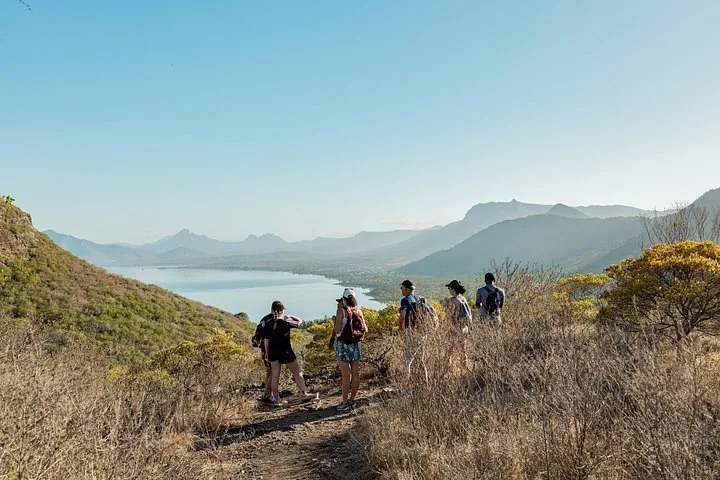
Le Morne Midway Loop with Yanature
- ★ 4.9/5 · 10+ product reviews
- 3 hours
- Operated by Yanature
Includes: Guided hike · English or French · Up to 12 guests
From EUR 55 per person
Check availability ↗Choose your date and complete your booking on Viator.
The best season depends on what you need
Mauritius Meteorological Services describes June to September as the relatively cool, dry winter and November to April as the warm, humid summer. May and October are transition months. For someone who finds heat tiring on an uphill walk, the cooler period is a reasonable planning preference. This is an editorial recommendation based on the broad seasonal pattern, not a promise of dry ground at Le Morne.
A holiday month and a hiking day are different decisions. You may have excellent walking conditions during a warmer month or unsuitable weather during the drier season. Reserve some flexibility in your itinerary and compare the short-range forecast with the authority’s access information shortly before the visit. A prepaid tour should never become a reason to ignore a closure or instruction at the entrance.
A simple seasonal comparison
| Period | General seasonal context | How to plan |
|---|---|---|
| June–September | Relatively cooler and drier winter | Useful first choice for heat-sensitive walkers; still check wind and rain |
| May and October | Transition months | Judge the actual forecast rather than assuming stable conditions |
| November–April | Warmer, more humid summer | Keep the day flexible, manage exertion and check weather warnings |
The table describes island-wide climate, not a mountain-specific forecast. It does not establish opening days, the condition of a particular trail surface or the visibility from a viewpoint. Avoid choosing between dates from a monthly average alone when current observations and warnings are available.
Best time of day: after opening, with a generous return
The Le Morne Heritage Trust Fund currently publishes 07:00–16:00 opening hours and a latest start of 14:30. An early start within those hours leaves more of the day available for pauses and a comfortable return. That is a practical preference, not permission to enter before opening or a claim that every morning will be cooler or clearer.
Work backwards from the return rather than planning only the climb. Allow time for parking, entrance instructions, the walk and a slow descent. The lower route to Viewpoint 2 is 2.53 kilometres each way in the authority’s guide. Our suggested two-to-three-hour walking allowance is a planning estimate; fitness, stops and conditions can make your day different. See the duration guide before choosing a transfer time.
Sunrise needs a separate decision
A sunrise photograph and an authorised early walk are not interchangeable. Do not enter before published opening or use an old sunrise-tour advertisement as evidence of permission. The upper section remains closed, including the route towards the cross. A guide’s availability does not override either restriction.
If your aim is soft morning light rather than a specific sunrise moment, ask the operator what can realistically be seen on a permitted lower-trail departure. If seeing the sun rise is essential, choose a lawful accessible coastal location and keep the mountain walk for opening hours. Our sunrise guide explains what to confirm before paying for an early tour.
How far ahead should you book?
There is no verified booking lead time or capacity forecast that applies to every day. First establish the permitted itinerary, then inspect the selected date and cancellation terms on the provider’s page. For Local Spirit, the published upper-route product needs a written Section 1-only replacement proposal before you treat it as a suitable booking. A calendar slot alone is insufficient.
Ask what happens if the authority closes access or the operator changes the route. Keep those conditions with your confirmation and arrange transport on compatible terms where possible. If you have only one free morning, accept that the walk may not happen; a short holiday does not make a marginal forecast safer. If hiking is central to the trip, leaving several possible mornings gives you more room to respond.
Match the season to your group
For a family, the practical issue may be how long the children remain comfortable uphill rather than which month receives the least rain. For someone uneasy with heights, calm conditions and an agreed lower turnaround may matter more than the holiday season. Talk about those preferences before booking, so the group does not discover conflicting expectations at a viewpoint.
Plan supplies for the walk you are actually doing. Carry water, suitable footwear and sun protection even during the cooler season; a broad winter label does not make the exposed parts of an uphill walk effortless. A light rain layer can help with changing conditions, but equipment does not turn a warning or closure into an invitation to proceed. Read what to wear for the practical packing decisions.
A three-stage date check
When choosing the holiday, use the seasonal pattern to decide what kind of conditions you prefer. In the days before the walk, review the official weather service and check the mountain authority’s notice. On the morning itself, follow entrance staff and the guide’s operating decision. These checks answer different questions and should not be replaced by a single weather icon on a booking page.
Keep one alternative that does not depend on the same favourable outdoor conditions. A kayak trip needs suitable sea conditions and a helicopter needs aviation acceptance; neither is a guaranteed substitute when weather stops a hike. A flexible coastal visit or a quieter day may be the better use of your time. The best hiking date is the one that combines permitted access, suitable conditions and a pace your group can enjoy.
Sources and review date
Checked 11 November 2026. Le Morne Heritage Trust Fund · Official Section 2 closure · Official practical route guide · Official climate summary. Provider details refer to the dated sources on the linked tour pages; editorial planning suggestions are not operator guarantees.