You can plan around a comfortable lower-trail turnaround. You do not need to approach a viewpoint edge, and the upper scramble is currently closed.
Researched 11 November 2026 · Independent visitor guide
PLAN YOUR EXPERIENCE
Check dates & availability
A three-hour guided hike to the halfway viewpoints and around Le Morne, without the summit climb. Arrange your own transport. Choose your date and check the selected option’s meeting instructions.
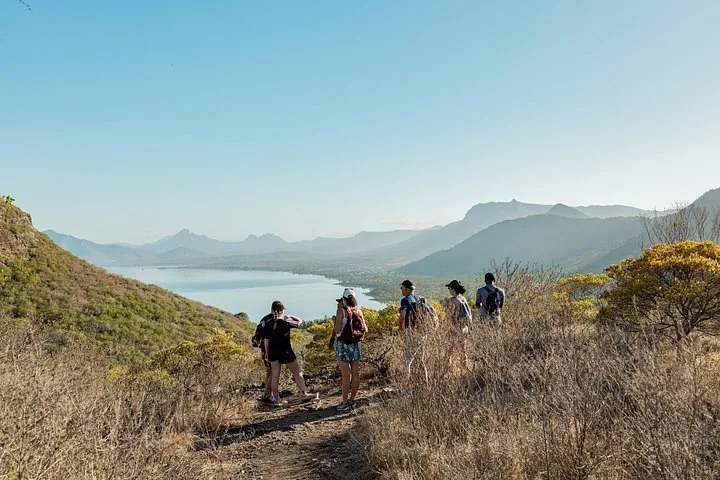
Le Morne Midway Loop with Yanature
- ★ 4.9/5 · 10+ product reviews
- 3 hours
- Operated by Yanature
Includes: Guided hike · English or French · Up to 12 guests
From EUR 55 per person
Check availability ↗Choose your date and complete your booking on Viator.
Separate the open walk from the famous scramble
Many photographs and older accounts describe steep upper terrain on Le Morne. That route is in Section 2 and is currently closed. The open lower route is a different planning question: an uphill walk towards lower viewpoints, subject to current conditions and entrance instructions. Avoid evaluating today’s visit entirely from a historic summit video.
This distinction does not mean the lower walk is free of discomfort or fall risk. Uneven ground, viewpoint edges and the feeling of being high above the coast can still matter. A useful plan gives you control over the pace and turnaround instead of promising that you will stop feeling anxious once the walk begins.
Describe what makes you uncomfortable
Before reserving, tell the operator whether your concern is standing near an edge, seeing a long drop, walking on narrow ground or feeling unable to leave a group. These are different concerns. Ask for a description of the precise permitted route and where a person can choose to turn around. General encouragement is less useful than a practical explanation.
You do not need to diagnose your reaction or prove that it is reasonable. Explain what would make the outing enjoyable: keeping back from edges, taking breaks, staying on the lower route and returning early if needed. If the operator cannot explain how those preferences fit the group arrangement, choose another plan rather than relying on reassurance alone.
Agree on a turnaround before you start
A specific agreement removes pressure later. Tell your companion or guide that a comfortable lower stop is a successful visit, and that reaching Viewpoint 2 is optional. Ask whether the whole group must stay together and what happens if one person wants to descend. Do not assume a shared tour can split into separate groups safely or without additional staff.
A private service may offer more flexibility if the operator confirms it, but the route still has the same terrain and closure restrictions. Ask for a Section 1-only itinerary and written price. Local Spirit’s verified listing advertises upper-route guiding; no replacement package has been confirmed for this site, so its calendar or published full-route price should not be treated as an answer.
Manage viewpoints on your terms
Stay comfortably back from the edge and choose a stable place to pause. You can look at the landscape without moving to the front of a platform or reproducing another visitor’s photograph. Let people pass when there is a suitable place to do so, and keep your attention on footing when moving. Put the phone away before negotiating awkward ground.
A companion can help by asking whether you would like to pause or return rather than insisting that the view is worth it. Avoid making the outing a test of courage. If discomfort keeps increasing, an earlier descent may be the best decision. For persistent or severe anxiety, discuss appropriate support with a qualified professional rather than expecting a tour guide to provide treatment.
Choose conditions that leave room to think
Check the weather and access guidance. Wet ground, poor visibility or a rushed late start can make an already uncertain walk harder to enjoy. Current published opening is 07:00–16:00, with a latest start of 14:30. Choose a permitted start that leaves generous time for the return instead of planning around the latest possible entry.
Wear shoes you trust, keep hands available and carry what you need in a light backpack. Avoid loading the day with a tight onward booking. Having time in reserve makes it easier to stop, ask a question or turn around without worrying that a driver or activity will be missed. A guide’s presence does not eliminate the need for that margin.
Read reviews without borrowing someone else’s confidence
A reviewer who found the hike manageable may have different experience, fitness and comfort around heights. A review may also describe the upper route before the closure or a different operating decision. Use reviews for observations about communication and pacing, then ask current questions directly. Do not use a positive rating as proof of permission or suitability.
Likewise, a dramatic photograph can exaggerate or obscure what the photographer was standing on. Captions and route descriptions matter. Our viewpoints guide distinguishes lower stops, the closed cross and aerial images. Choose your day from those practical distinctions rather than a social-media composition.
Alternatives should address the actual concern
If walking near a drop is the problem, a coastal visit may be more comfortable than a mountain viewpoint. A helicopter flight is not automatically a better choice for someone uneasy with heights, and kayaking introduces separate water-confidence and fitness requirements. Think about which setting you enjoy rather than choosing the most dramatic alternative experience.
You can also split the group’s day. Some people may take an authorised lower walk while others enjoy a separately arranged coastal visit, provided transport and meeting plans are clear. Nobody needs to buy a physically demanding activity to make the day worthwhile. The after-hike guide offers ways to leave the afternoon flexible.
Questions worth sending in one message
Tell the operator your date, party size, concern about exposure and preference for a lower route. Ask for the stopping points, group arrangement, return procedure and current price. Add whether you need pickup and where you are staying. A specific written reply gives you something useful to assess before paying.
If the answer still promises the closed upper route, do not reserve on that basis. If it confirms a permitted walk but the description does not sound comfortable, choose a different day out. A good outcome is an outing that suits your confidence and interests, not completing someone else’s idea of the full mountain experience.
Sources and review date
Checked 11 November 2026. Le Morne Heritage Trust Fund · Official Section 2 closure · Official practical route guide. Provider details refer to the dated sources on the linked tour pages; editorial planning suggestions are not operator guarantees.