Le Morne Cultural Landscape is a UNESCO World Heritage Site associated with maroons who escaped slavery. Visit it as a place of memory, not only a viewpoint.
Researched 11 November 2026 · Independent visitor guide
PLAN YOUR EXPERIENCE
Check dates & availability
A three-hour guided hike to the halfway viewpoints and around Le Morne, without the summit climb. Arrange your own transport. Choose your date and check the selected option’s meeting instructions.
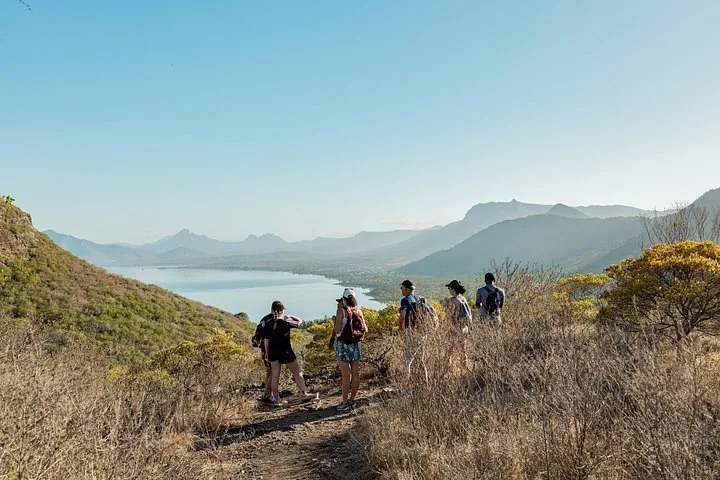
Le Morne Midway Loop with Yanature
- ★ 4.9/5 · 10+ product reviews
- 3 hours
- Operated by Yanature
Includes: Guided hike · English or French · Up to 12 guests
From EUR 55 per person
Check availability ↗Choose your date and complete your booking on Viator.
Why the mountain matters
UNESCO recognises Le Morne Cultural Landscape for its connection to resistance against slavery and the memory of people who sought freedom. Escaped enslaved people, known as maroons, used the mountain’s difficult terrain as refuge. The physical landscape and the traditions attached to it are inseparable from its significance.
That context changes how a visit feels. The slopes are not simply an obstacle on the way to a photograph. They form part of a landscape connected to coercion, escape, survival and the continuing importance of remembrance in Mauritius.
Read stories with care
Accounts of Le Morne often repeat dramatic stories about people leaping from the mountain. The presence of a story in a tour description does not make every detail an established historical fact. UNESCO discusses oral traditions as part of the site’s significance; that is different from treating a simplified narrative as a fully documented event.
A thoughtful guide can explain which parts come from oral tradition, which are supported by historical research and where interpretations differ. Ask those questions respectfully. Avoid expecting a single dramatic anecdote to stand in for the lives of the people connected with the place.
What a local guide can add
Local interpretation can connect the mountain to village life, memory, plants and the surrounding landscape. The checked Local Spirit listing specifically describes cultural and plant interpretation by guides from Le Morne. Yanature also describes the mountain’s heritage in its hiking product. Both listings need a confirmed lower-trail itinerary while Section 2 is closed.
A useful booking question is not only “how far do we climb?” but “how much time do we spend understanding the site?” If cultural interpretation matters most, make that clear before reserving. A shorter permitted walk can still be worthwhile when it gives you space to listen and ask questions.
Visiting respectfully
Keep voices and music low. Do not collect plants, stones or possible archaeological objects, and do not mark rocks or trees. Follow the designated path and give other visitors room at stopping places. The Trust Fund’s visitor information specifically asks visitors to respect the cultural heritage and avoid disturbing archaeological material.
Do not treat the memorial cross as climbing equipment or a prop for a photograph. It is in the closed upper section at present, and even when access changes, the official visitor endpoint is not an invitation to climb beyond it.
You can engage with the history without the upper climb
The cultural landscape is larger than one viewpoint. A lower-trail walk, a coastal visit and time spent reading the official interpretation can form a meaningful visit. The coastal visit with a scenic flight is one separately bookable option whose checked description explicitly excludes a mountain hike.
Before planning any mountain component, read the access notice. Respect for the site includes respecting restrictions designed to protect visitors and the landscape.
Further reading
UNESCO: Le Morne Cultural Landscape and the Le Morne Heritage Trust Fund. Research checked 11 November 2026. This is an independent visitor summary, not an official heritage interpretation.